

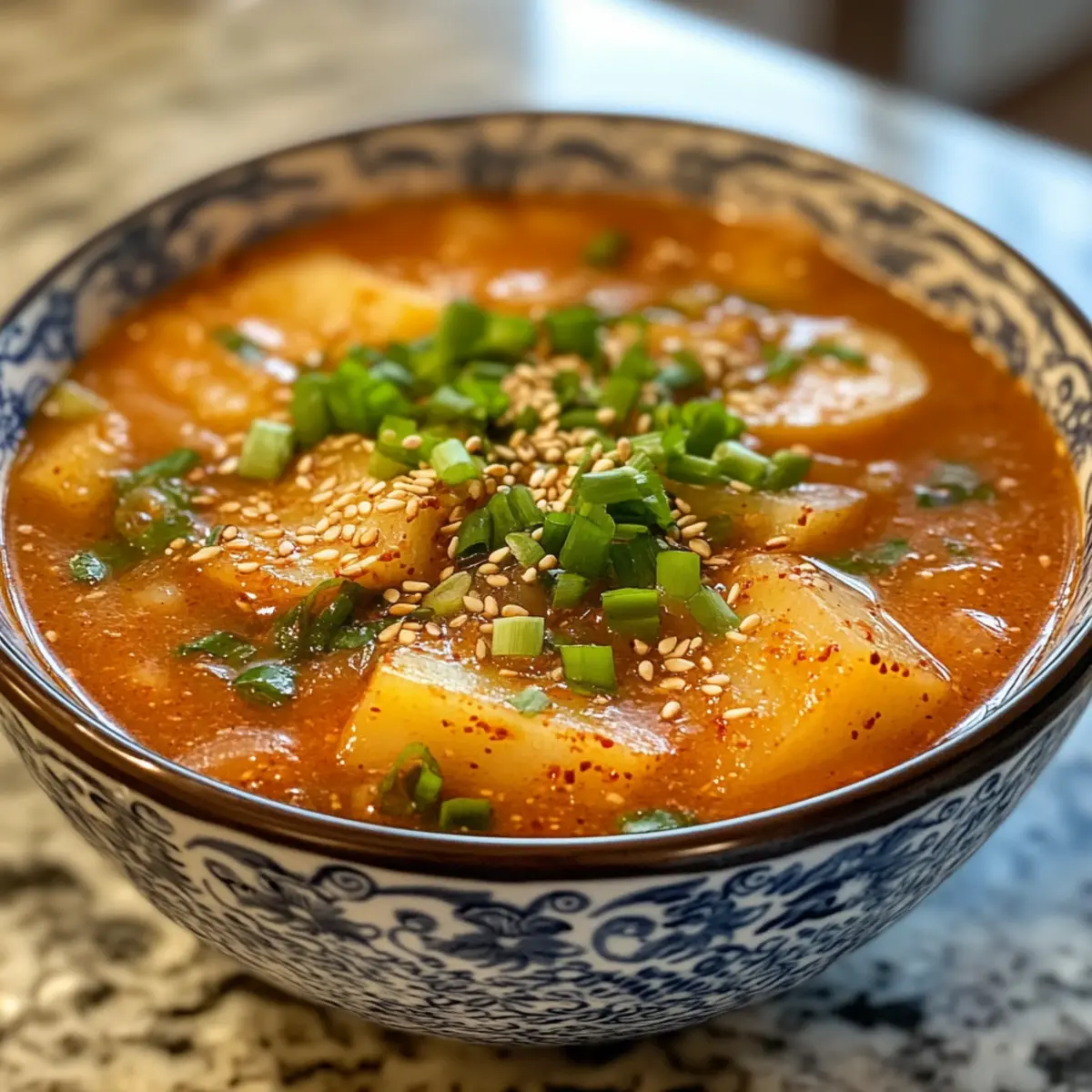
As I stood by the stove, the inviting aroma of sautéing garlic and sesame oil began to fill my kitchen, signaling a moment of culinary magic about to unfold. Today, I’m excited to share my recipe for Vegan Korean Radish Soup, or Mu Guk, a heartwarming dish that showcases the tender sweetness of daikon radish simmered in a rich kombu-garlic broth. This delightful soup is not only comforting but also quick to prepare, making it a fantastic option for anyone looking to escape the fast-food rut. Plus, it’s vegan and gluten-free—perfect for those of us seeking wholesome, plant-based meals! Whether you’re winding down from a hectic day or prepping for the week ahead, this Korean Radish Soup warms both the body and spirit. Curious to discover how easy it is to create a bowl of bliss? Let’s get started!
Why Is This Soup So Special?
Simplicity comes first! This Korean Radish Soup is incredibly easy to whip up, perfect for busy evenings or meal prep days. Savory flavors shine through with each spoonful, as the kombu and shiitake mushrooms create a rich and satisfying broth. Versatile ingredients mean you can adjust the recipe to suit your taste, whether you’re adding tofu for protein or different vegetables for extra nutrition. Crowd-pleaser status is assured—everyone will savor this delightful bowl of warmth. Embrace the joy of homemade simplicity with this vegan gem, ideal for anyone looking to move away from fast food! If you enjoy comforting dishes, you might also love this Homemade Chicken Soup for a hearty twist.
Korean Radish Soup Ingredients
• Here’s everything you need to whip up this hearty Korean Radish Soup!
For the Soup
• Korean Radish (Daikon) – The star of our soup, providing natural sweetness and a delightful texture.
• Sesame Oil – Adds a rich, nutty aroma that enhances the overall flavor.
• Water or Vegetable Broth – Use vegetable broth for a deeper, more robust flavor in your Korean Radish Soup.
• Kelp/Dashi Kombu – Infuses the soup with umami goodness; essential for that savory broth.
• Dried Shiitake Mushroom – Brings an earthy note; feel free to swap with fresh mushrooms if you prefer.
• Green Onions – Adds freshness and color; slice them diagonally for a beautiful presentation.
• Garlic – A must-have for a fragrant and robust flavor; mince for even distribution.
• Gluten-Free Soy Sauce or Coconut Aminos – Provides saltiness and depth; adjust to taste.
• Salt – Enhances flavor; add more according to your liking.
• White Pepper (optional) – Adds a gentle kick; adjust based on your spice preference.
• Vegan “Beef” Alternative (optional) – Adds protein to the dish; sauté alongside the radish if desired.
For Garnishing
• Sesame Seeds – Sprinkle on top for added texture and visual appeal just before serving.
• Fresh Green Onion – Brightens up the dish; use as a finishing touch for added freshness.
Step‑by‑Step Instructions for Korean Radish Soup
Step 1: Prepare the Radish
Begin by peeling the Korean radish (daikon) and cutting it into triangle shapes, about ½ inch thick. This size will ensure even cooking and optimal flavor absorption. Set the sliced radish aside while you gather the rest of your ingredients.
Step 2: Sauté the Radish
In a large pot, heat 1 tablespoon of sesame oil over medium-high heat. Once hot, add the radish slices and sauté them for 2-3 minutes until they become translucent, stirring frequently to prevent sticking. You want them to soften slightly and absorb the oil’s aromatic essence before adding more ingredients.
Step 3: Add Aromatics
Next, toss in the diagonally sliced green onions and sauté for an additional 1-2 minutes until they become fragrant and vibrant. The combination of sautéed radish and green onions creates a beautiful base for your Korean Radish Soup, inviting those comforting aromas to fill your kitchen.
Step 4: Start the Broth
Now, incorporate the kombu, dried shiitake mushroom, minced garlic, and 4 cups of water or vegetable broth into the pot. Increase the heat to high and bring the mixture to a boil. Once bubbling, reduce the heat and let it simmer for 12-15 minutes, or until the radish is tender and the flavors meld beautifully.
Step 5: Season the Soup
After simmering, stir in gluten-free soy sauce or coconut aminos and salt to taste. Allow the soup to simmer for an additional 3 minutes, ensuring the flavors deepen. Taste the broth and adjust seasoning if necessary, as this step is crucial for a well-rounded Korean Radish Soup.
Step 6: Garnish and Serve
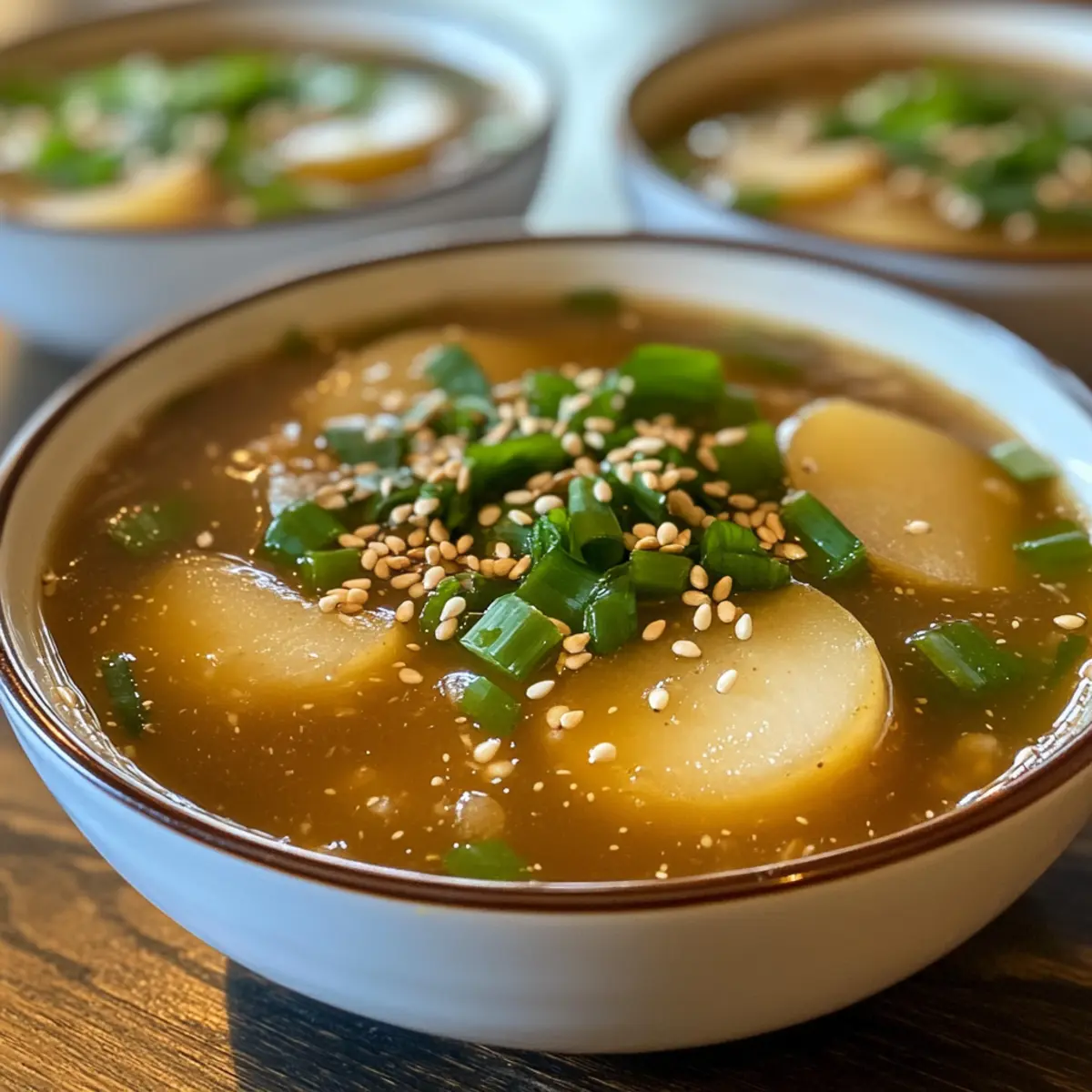
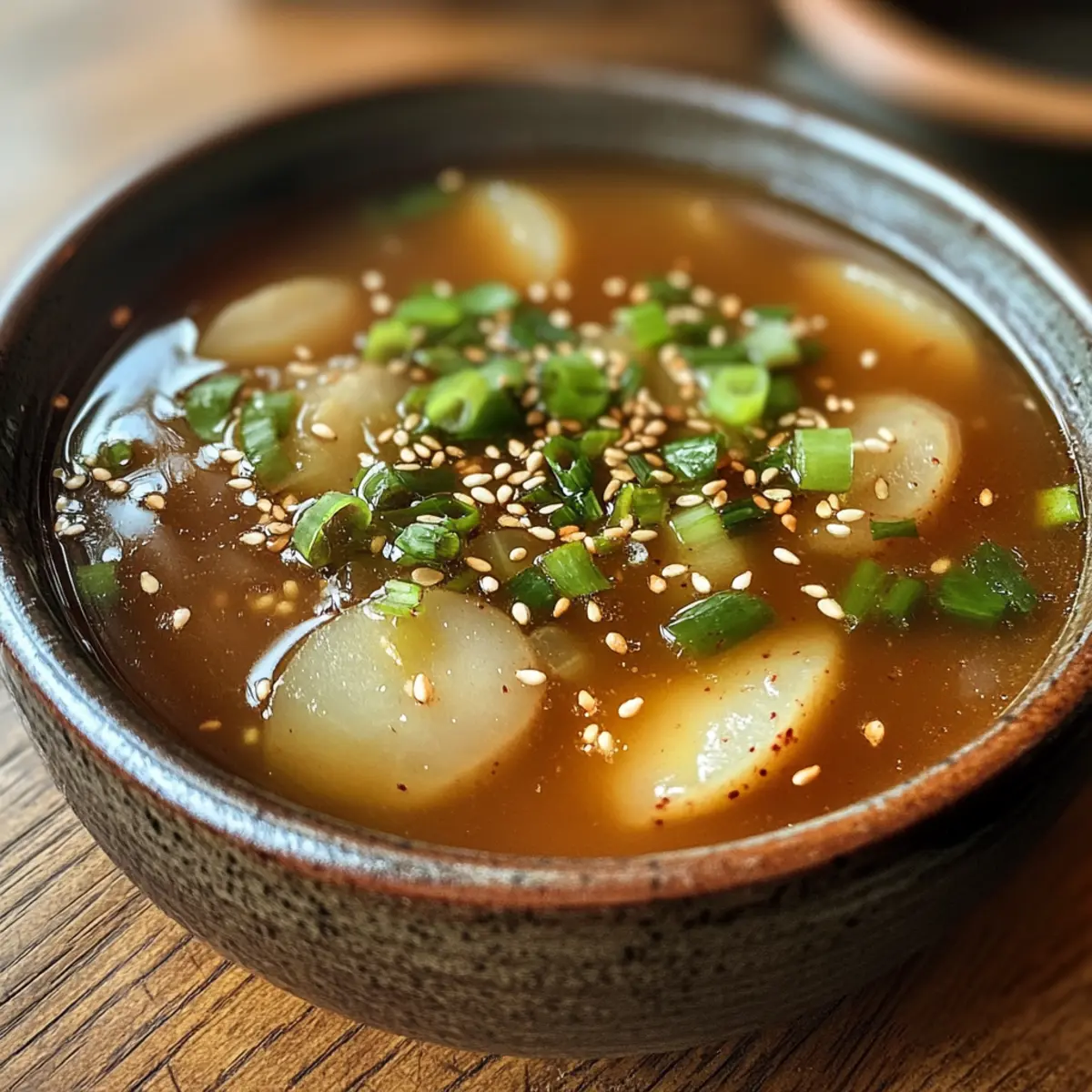
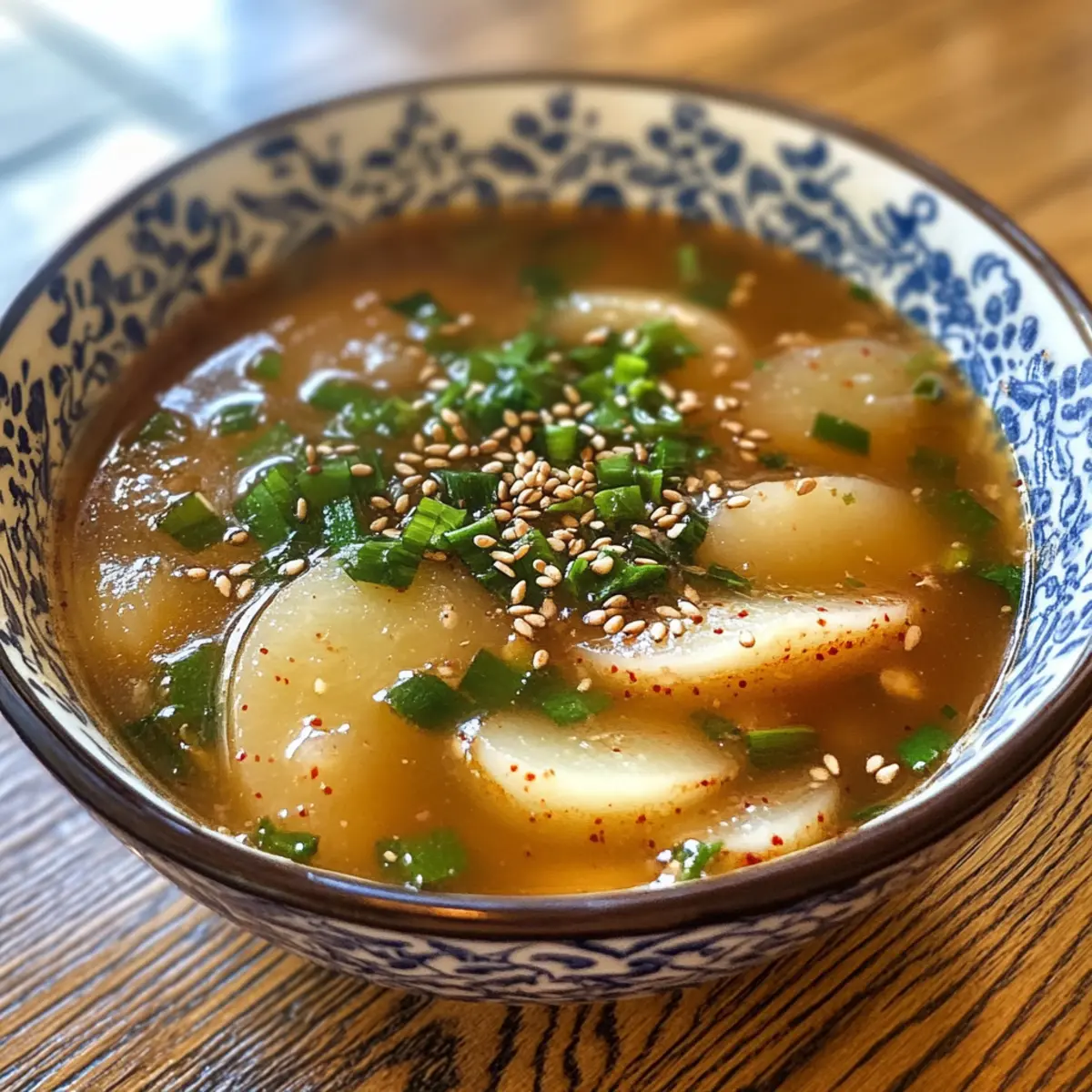
Ladle the hot Korean Radish Soup into bowls and garnish with a sprinkle of sesame seeds and freshly chopped green onions. This final touch adds both texture and color, enhancing the dish’s overall appeal. Serve immediately to enjoy the comforting warmth of this delightful soup!
Make Ahead Options
These Vegan Korean Radish Soup (Mu Guk) components are perfect for meal prep, saving you precious time during busy weeknights! You can chop the Korean radish and green onions up to 24 hours in advance, storing them in an airtight container in the refrigerator to maintain their freshness. Additionally, you can prepare the broth (sans salt and soy sauce) up to 3 days ahead. Simply sauté the radish and aromatics as instructed, then cool and store the broth until you’re ready to finish. When it’s time to serve, just reheat the broth, add the seasonings, bring to a simmer, and garnish. This preparation helps you enjoy a comforting bowl of Korean Radish Soup on short notice, without compromising on flavor!
Korean Radish Soup Variations You’ll Love
Feel free to play with this recipe and make it your own—every variation can lead to a delicious surprise!
-
Vegetable Boost: Add sliced carrots or bok choy for an extra dose of nutrition. These vibrant veggies bring a lovely color and flavor, making your soup even heartier.
-
Mushroom Swap: Shiitake Alternate: Replace dried shiitake mushrooms with any favorite variety, or omit them entirely if you prefer a lighter broth. Each mushroom brings its unique twist, enhancing the overall depth of flavor.
-
Rice or Noodles: Hearty Base: Serve the soup over steamed rice or noodles for a filling meal. This added texture turns a delightful broth into a wonderfully complete dish for those cozy evenings.
-
Extra Protein: Tofu/Seitan: Incorporate cubed tofu or seitan for added protein. Sauté with the radish for a heartier soup that keeps you satisfied for hours.
-
Spicy Kick: Chili Oil or Flakes: Drizzle in chili oil or sprinkle red pepper flakes for a fiery element. A little heat can elevate the cozy flavors to something unforgettable.
-
Creamy Addition: Coconut Milk: For a richer, creamier soup, stir in a can of coconut milk at the end. This sweet addition brings a luxurious texture and contrasts beautifully with the savory aspects.
-
Citrus Zest: Lime or Lemon: A squeeze of fresh lime or lemon juice right before serving enhances the flavors with a refreshing brightness. It’s the perfect finishing touch to lift the entire dish.
-
Luxurious Garnish: Herb Infusion: Sprinkle fresh cilantro or parsley as a garnish for an aromatic finish that adds visual appeal. The fresh herbs brighten the soup, making it feel even more special.
As you experiment with these variations, you might also find a newfound appreciation for comforting classics like Homemade Chicken Soup that can awaken those nostalgic flavors! Enjoy the adventure in your kitchen!
What to Serve with Vegan Korean Radish Soup
This inviting dish pairs beautifully with a variety of sides and drinks, crafting a memorable meal experience.
-
Steamed Jasmine Rice: The fluffy texture of jasmine rice absorbs the savory broth, creating a comforting balance with each bite.
-
Spicy Kimchi: Adding a side of tangy and spicy kimchi introduces a delightful crunch and contrasting flavors that elevate the entire dish.
-
Sesame Spinach Salad: This fresh salad adds brightness and a nutty flavor, harmonizing beautifully with the umami richness of the soup.
-
Crispy Tofu Bites: Crunchy on the outside and tender within, these bites provide an excellent source of protein and a satisfying contrast to the soup’s warmth.
-
Roasted Sweet Potatoes: Their natural sweetness complements the savory elements of the soup. Plus, they add a delicious textural variety to the meal.
-
Refreshing Cucumber Salad: Light and crunchy, this salad not only adds freshness but also acts as a palate cleanser between bites of the hearty soup.
-
Chilled Herbal Tea: A lightly sweetened herbal tea can cleanse your palate while enhancing the meal’s comforting flavors, making it a delightful drink pairing.
Feel free to mix and match these options to create a delightful dining experience that warms both heart and soul!
How to Store and Freeze Korean Radish Soup
Fridge: Store leftovers in an airtight container for up to 4 days, allowing flavors to meld and improve for your next cozy meal.
Freezer: To extend storage, freeze Korean Radish Soup in a suitable container for up to three months. Thaw overnight in the fridge before reheating.
Reheating: Reheat the soup on the stovetop over low heat, stirring occasionally, or in the microwave until hot throughout.
Serving Fresh: For the best taste, enjoy the soup fresh, but don’t hesitate to savor leftovers—they’re just as comforting!
Expert Tips for Korean Radish Soup
• Choosing the Right Radish: Select a large Korean or Asian radish for its sweetness and texture—avoid smaller, spicier varieties that can alter the soup’s flavor.
• Enhancing Umami: For an extra savory kick, soak your dried shiitake mushrooms in warm water for about 20 minutes before adding them; this elevates the depth of your Korean Radish Soup.
• Storage Know-How: Store any leftovers in an airtight container in the fridge for up to 4 days; freeze for up to three months during extended meal prep—just thaw and reheat!
• Flavor Adjustments: Taste as you go! After seasoning your soup with soy sauce or coconut aminos, adjust to your preference to ensure a perfectly balanced broth.
• Adding Veggies: Feel free to add other vegetables like bok choy or carrots for a vibrant and nutritious twist, making your Korean Radish Soup even more delightful!
Korean Radish Soup Recipe FAQs
What type of radish is best for this soup?
I recommend using a large Korean or Asian radish (daikon) as it provides the sweet, tender texture that makes this soup special. Avoid smaller, spicier varieties which can result in an undesired flavor profile.
How should I store leftover Korean Radish Soup?
Store leftover soup in an airtight container in the refrigerator for up to 4 days. This allows the flavors to meld beautifully, offering a delightful second serving that’s even more comforting!
Can I freeze Korean Radish Soup?
Absolutely! To freeze, allow the soup to cool completely, then transfer it to a suitable freezer-safe container. You can freeze it for up to three months. When you’re ready to enjoy it again, just thaw overnight in the refrigerator before reheating.
What should I do if my broth tastes too bland?
If you find your broth lacking, try tasting it before serving. You can enhance the flavors by adding more gluten-free soy sauce or coconut aminos gradually, stirring and tasting until it reaches your desired level of savory goodness.
Are there any allergy considerations with this recipe?
Yes! This vegan Korean Radish Soup is gluten-free, provided you use gluten-free soy sauce or coconut aminos. Always check ingredient labels to ensure they meet your dietary needs, especially if serving guests with specific allergies.
What if my radish is too tough after cooking?
If the radish hasn’t softened to your liking after the recommended cooking time, continue to simmer it for another 5-10 minutes. This will help break down the fibers and make them tender, resulting in that comforting texture we all love in Korean Radish Soup.
Savory Korean Radish Soup That Warms the Soul
Ingredients
Equipment
Method
- Prepare the Korean radish by peeling and cutting it into triangle shapes, about ½ inch thick.
- In a large pot, heat sesame oil over medium-high heat. Add radish slices and sauté for 2-3 minutes until translucent.
- Toss in diagonally sliced green onions and sauté for an additional 1-2 minutes.
- Incorporate kombu, dried shiitake mushroom, minced garlic, and water or vegetable broth. Bring to a boil and then simmer for 12-15 minutes.
- Stir in soy sauce or coconut aminos and salt to taste. Simmer for an additional 3 minutes.
- Ladle the soup into bowls and garnish with sesame seeds and freshly chopped green onions.